
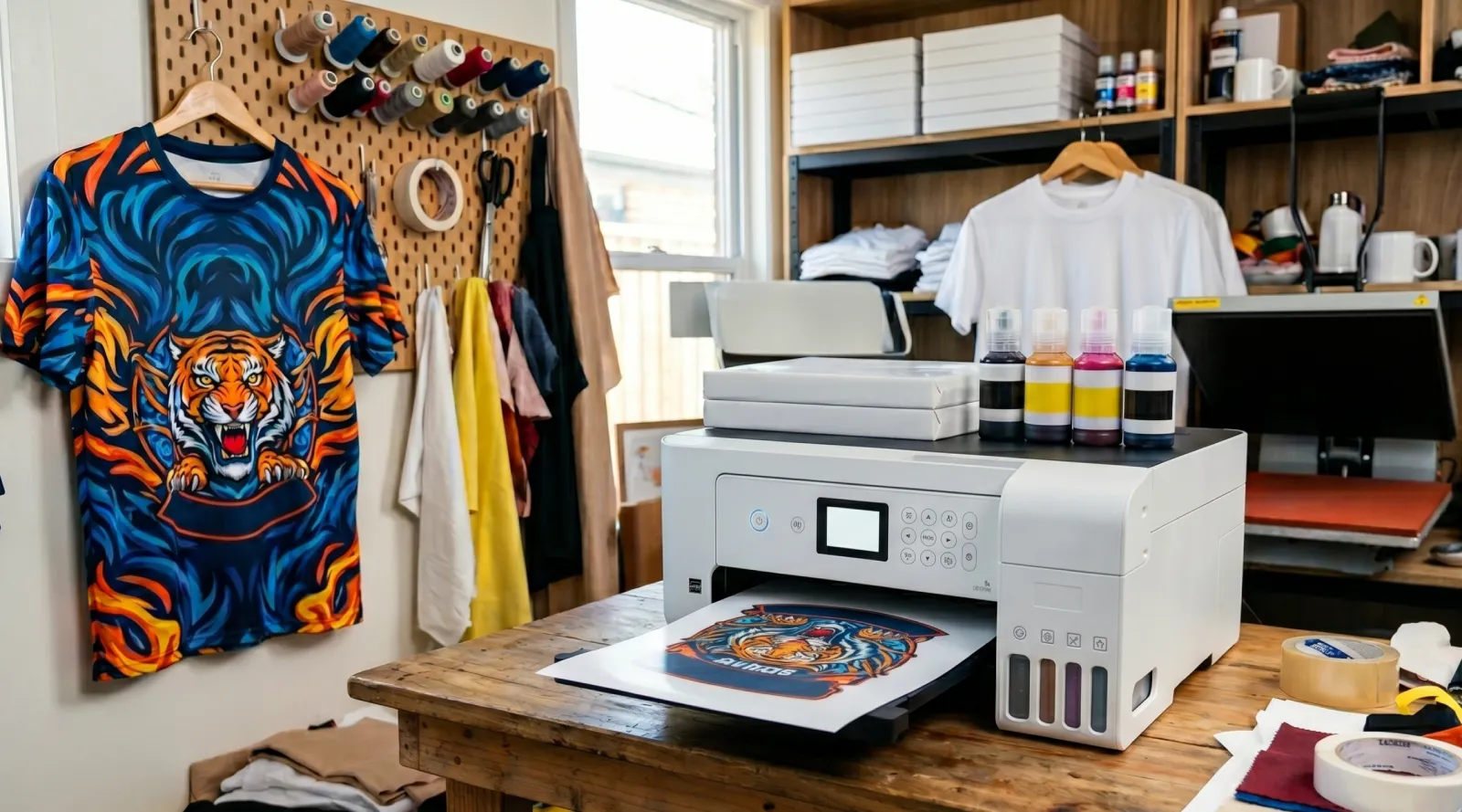
Why Sublimation Printing Is the Best Choice for High-Quality Custom Apparel
Read Time:4 Minute, 26 Second
Most imperfections observed in prints are not related to the design but to chemistry. For instance, screen prints crack because the ink is layered on top of the fabric. Vinyl transfers ultimately peel off because the bonding adhesive weakens over time. Sublimation is not affected by any of these issues because, in fact, the ink never touches the surface.
This is how it works: the sublimation ink is first printed onto a transfer paper. The heat press then will expose the transfer paper and material to temperatures typically between 190°C to 200°C. During this process, two things occur at the same time, the polyester fibers open up, while the ink solid state turns into a gas. This won’t allow the gas to create any film like layer but to embed directly into the polyester fiber structure. Once the fiber cools down, the gas will turn into solid and you end up with a design that is part of the fabric.
The principle behind this is that the print gets a molecular bond with the base fabric which gives the industry associated term “zero hand” feel. This means you will not feel a layer on top of the fabric but the fabric itself. Also, it will not add unexpected texture to your material and the material will breath as if no printing was done at all.
Design Freedom Without the Setup Cost
Screen printing is cost-prohibitive in short runs because most of the expense precedes printing. Prepress is a manual, labor-intensive process that includes screen creation, color separations, multiple setup charges, and minimum print quantity requirements. Screens alone can cost $30-$100 each and result in a large stack of paper prints before production even starts. High minimums make it hard to justify when an entire run might be 100 units.
Sublimation runs on a CMYK color model through a digital printer, which means photorealistic gradients, complex patterns, and unlimited color variations all print at the same cost. A full-bleed all-over print costs no more to produce than a single-color logo on a chest pocket.
This is where the economics change for small and growing brands. Many start by outsourcing their print runs, which works at low volume but erodes margins as orders grow. At that inflection point, investing in hardware from a reputable sublimation printer UK supplier gives brands direct control over their output, shorter turnaround times, and the ability to run single units profitably. For print-on-demand operations, that last point is significant, you’re not warehousing stock, you’re printing to order.
The global digital textile printing market, sublimation is one of its largest segments, was valued at $2.6 billion in 2021 and is projected to reach $7.8 billion by 2031 (Allied Market Research). That growth is driven largely by on-demand production models that traditional screen printing can’t serve efficiently.
The Durability Case is Straightforward
Sublimation prints are more durable compared to screen prints because they do not peel, crack, or fade easily. This makes it more functional and aesthetically pleasing. Sublimation dye is directly applied to the fabric, rather than physically placed on top of it; the ink is actually embedded within the fabric fiber. This ensures that it will not be as easily degraded by abrasion or heat. Because of this remarkable durability sublimation printing has become the standard for the production of sportswear.
The Honest Limitations
Sublimation cannot be applied to all types of fabrics or all colors of garments. The ink used in sublimation is transparent, so it can only be applied to white or very light-colored backgrounds. Dark colors in the base fabric absorb and hide the dye, making it impossible to use on dark colors.
The polyester content is also crucial. The fabric must contain a minimum of 65% polyester to achieve vibrant and accurate colors. When printed on 100% cotton, the results are barely visible because disperse dyes do not adhere to natural fibers. Poly-blend fabrics with a 50/50 split or tri-blend fabrics will result in a faded, vintage look. While some brands leverage this look intentionally, you should not expect a full-color print.
These limitations are not a showstopper for most custom apparel businesses, they help determine the types of products you can offer. If your product line consists mainly of white or light-colored performance wear, sublimation is a perfect choice. If you are making dark-colored cotton garments, direct-to-garment printing is probably the right technology to use.
Who Sublimation Actually Works For
Custom sportswear brands, print entrepreneurs, team kit suppliers, and activewear labels all leverage what sublimation is good at: long-lasting, breathable, full-color prints on synthetic fabrics, with no minimum run constraints. The absence of screen setup charges means the cost per unit is the same for producing a single custom jersey or a batch of five hundred at the print stage.
Add to that the production output that genuinely rivals retail athleisure in relation to feel and performance, and it’s not surprising that sublimation has effectively replaced other methods for this segment of clothing. The print is not only superior in appearance but also in durability, comfort, and feasibility for large and small productions. For all those developing a performance apparel brand, these are convincing arguments.

Happy
0 %

Sad
0 %

Excited
0 %

Sleepy
0 %

Angry
0 %

Surprise
0 %
 0
0
 0
0
More Stories

How Do Solar Panels Fit Into a Smart Home System?
If you are considering installing solar panels, you may also be wondering how they could fit into a wider smart...

Private Leased Offices in London: How to Plan Space, Costs and Fit-Out
A private lease can give you control of your own suite or floor in London. Before committing, establish which costs...
Why Retention Matters More Than Sales in a Subscription Business
There's a moment that catches out almost everyone running a subscription business for the first time. Month one goes well....

Why Your Employee Handbook Needs an Annual Audit
The handbooks that account for the majority of legal problems aren't visibly outdated. At first glance, they often appear modern...
How to Design a High-Impact Trade Show Booth Without Sacrificing Sustainability
Good design creates less waste. The big savings can be found at the end of the show because that's where...

Curved Rental LED Screens: When Are They Worth It?
A flat LED wall is still the right answer for many events. It is clean, familiar, and efficient. But some...