Resolve QuickBooks Install Error: Effective Ways to Fix Installation Problems
ID: #243630
Listed In : Accounting Services
Business Description
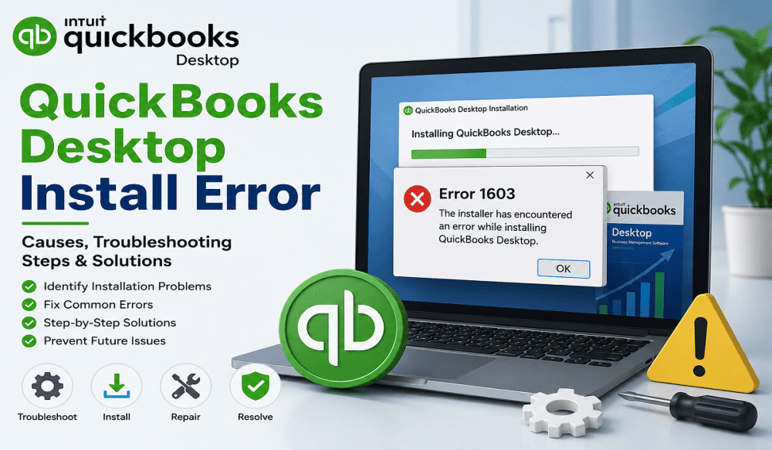
Installing QuickBooks Desktop should normally be a straightforward process, but sometimes the setup may stop unexpectedly or display an installation error. Problems can occur because of damaged installation files, Windows configuration issues, missing components, insufficient permissions, or another program interfering with the setup.
If QuickBooks is not installing correctly, there is no need to repeatedly run the installer without identifying the underlying cause. A systematic troubleshooting approach can help resolve the problem and allow QuickBooks Desktop to install properly.
## What Causes a QuickBooks Install Error?
A QuickBooks installation problem can have several possible causes. Understanding them makes troubleshooting easier.
Common reasons include:
* Damaged or incomplete QuickBooks installation files
* An outdated Windows operating system
* Problems with Microsoft .NET Framework
* Issues with Microsoft MSXML components
* Insufficient Windows permissions
* Another installation running in the background
* Security software interfering with setup
* Previous QuickBooks installation files causing conflicts
* Corrupted Windows Installer components
* Temporary files creating installation conflicts
The exact solution depends on what is preventing the installation from completing.
## Restart Your Computer Before Troubleshooting
A simple restart can sometimes resolve temporary Windows conflicts. If another software installation or Windows update was running in the background, restarting the computer can release files and services that QuickBooks needs.
After restarting, close unnecessary applications and try installing QuickBooks again.
If the installation still fails, continue with the troubleshooting steps below.
## Run the QuickBooks Installer as Administrator
QuickBooks may require elevated Windows permissions during installation.
Locate the QuickBooks installation file, right-click it, and select **Run as administrator**. Follow the setup instructions and check whether the installation completes.
Running the installer with administrative privileges can help when Windows prevents the setup program from accessing required folders or system components.
## Use QuickBooks Tool Hub
QuickBooks Tool Hub is designed to help troubleshoot several common QuickBooks Desktop problems, including installation-related issues.
If you already have Tool Hub installed, open it and select **Installation Issues**. From there, use the available installation diagnostic option to check for problems affecting the QuickBooks installation.
After the diagnostic process finishes, restart the computer and try the QuickBooks installation again.
This is often a useful first-line troubleshooting method because it can address multiple installation components without requiring extensive manual changes.
## Check Windows Updates
An outdated Windows environment can sometimes interfere with software installation.
Open Windows Settings and check for available updates. Install pending updates and restart the computer when required.
It is also important to allow Windows updates to finish completely before starting the QuickBooks installation. Interrupting an update and immediately installing another application can sometimes create additional conflicts.
## Repair Microsoft .NET Framework
QuickBooks Desktop relies on several Microsoft Windows components. If the .NET Framework installation is damaged or incomplete, QuickBooks setup may fail.
If other troubleshooting methods do not work, check the installed .NET Framework components and repair them where appropriate.
Because Windows component repair can involve system-level settings, users who are not comfortable making these changes should consider getting assistance rather than modifying system files randomly.
## Check MSXML Components
MSXML is another Windows component that can be involved in QuickBooks installation problems.
If the installation repeatedly fails even after using the QuickBooks installation troubleshooting tools, MSXML-related issues may need to be investigated.
Do not remove system components unnecessarily. First determine whether the installation error actually points toward a Windows component problem.
## Make Sure Another Installation Is Not Running
Windows generally handles one installer operation at a time. If another application is being installed, updated, or removed, QuickBooks setup may be unable to proceed.
Close other software installers and allow Windows Update processes to finish.
Then restart the computer and launch the QuickBooks installer again.
This can be especially helpful when an installation message indicates that another installation is already in progress.
## Temporarily Check Security Software
Antivirus or security software can occasionally interfere with legitimate software installation processes.
If QuickBooks setup is being blocked, review your security software's notifications or quarantine history to determine whether the installer has been restricted.
Avoid permanently disabling security protection. If a temporary security adjustment is necessary for troubleshooting, follow your security provider's recommended procedure and restore protection afterward.
## Try Windows Selective Startup
Background applications and services can sometimes interfere with QuickBooks installation.
Windows Selective Startup allows you to start the computer with a limited set of services and applications. This can help identify whether a third-party program is causing the installation failure.
This method is more advanced than simply restarting the computer, so follow Windows configuration instructions carefully. After troubleshooting, return Windows to its normal startup configuration.
## Check Common QuickBooks Installation Error Codes
Different QuickBooks installation errors can point toward different underlying problems.
### Error 1603
Error 1603 is commonly associated with problems involving Windows components, permissions, or the QuickBooks installation process.
Using the QuickBooks installation diagnostic tools, updating Windows, and checking required Microsoft components are useful troubleshooting steps.
### Error 1303
Error 1303 can indicate that the installer does not have sufficient privileges to access a required directory.
Running the installer with appropriate administrator permissions and checking folder access can help resolve this type of problem.
### Error 1334
Error 1334 can occur when a required installation file is missing, damaged, or inaccessible.
Using a fresh installer and repairing the existing QuickBooks installation may help if the original installation files are incomplete.
### Error 1618
Error 1618 generally indicates that another installation is already in progress.
Allow the existing installation or update process to finish. If no visible installation is running, restarting Windows can clear temporary installer activity.
### Error 1712
Error 1712 may occur when Windows components required by QuickBooks are damaged or unavailable.
QuickBooks repair tools and Windows troubleshooting can help identify the underlying issue.
### Error 1723
Error 1723 is associated with a Windows Installer package problem and can sometimes involve temporary-folder permissions or damaged installer components.
Checking Windows permissions and using QuickBooks installation troubleshooting tools can be useful.
## Repair an Existing QuickBooks Installation
If QuickBooks is already partially installed, installing another copy over the existing installation may not solve the problem.
Instead, repair the current installation first.
Windows provides options for repairing installed programs, while QuickBooks Tool Hub also provides troubleshooting utilities that can help with program-related problems.
Once the repair is complete, restart Windows and check QuickBooks again.
## Remove Installation Conflicts Carefully
If QuickBooks remains unable to install, an older or damaged installation may be interfering with the new setup.
Before removing anything, make sure important QuickBooks company files and backups are safe.
If necessary, uninstall the existing QuickBooks Desktop installation through the normal Windows process. Avoid manually deleting random QuickBooks folders from system directories, as this can create additional problems.
After uninstalling, restart the computer and use a fresh QuickBooks installation file.
## Download a Fresh Installation File
A damaged installer can cause repeated setup failures.
If the installation file was interrupted during download or came from an unreliable source, obtain a new installer from a trusted source and verify that it matches your QuickBooks Desktop product and subscription.
Do not keep using the same damaged setup file and expect a different result.
## Check Windows Administrator Access
Installation errors can occur when the Windows user account does not have sufficient permissions.
If possible, sign in using an administrator account and try the installation again.
If the problem is specific to one Windows profile, testing the installation from another administrator account can also help determine whether the issue is related to the user profile.
## Clear Temporary Installation Problems
Temporary Windows files can occasionally interfere with software setup.
Before clearing temporary data, close QuickBooks and other applications. Windows provides built-in ways to manage temporary files.
Be careful when manually deleting files. Do not remove system files or folders simply because their names appear related to QuickBooks.
## When a Clean Reinstallation May Help
A clean reinstallation can be appropriate when:
* QuickBooks was only partially installed
* The existing installation is damaged
* Repair tools cannot restore the program
* Installation repeatedly fails after standard troubleshooting
* Previous QuickBooks components are conflicting with the new setup
A clean reinstall should be performed carefully, especially if the computer contains important company files or customized QuickBooks settings.
## Prevent Future QuickBooks Installation Problems
Once QuickBooks is successfully installed, a few habits can reduce future setup problems.
Keep Windows updated, maintain reliable backups, avoid interrupting software installations, and use trusted installation files.
It is also helpful to keep QuickBooks-related backups separate from the application installation itself. Your company data should never depend solely on whether the QuickBooks program is currently installed.
## Quick Troubleshooting Checklist
Before trying complicated fixes, work through this checklist:
1. Restart the computer.
2. Run the installer as administrator.
3. Confirm that Windows is fully updated.
4. Close other installation programs.
5. Use QuickBooks Tool Hub's installation troubleshooting options.
6. Check .NET Framework and MSXML if necessary.
7. Investigate antivirus or security interference.
8. Try Selective Startup for persistent conflicts.
9. Repair the existing QuickBooks installation when appropriate.
10. Use a fresh, compatible installation file.
11. Consider a clean reinstall if the existing installation is damaged.
## Final Thoughts
A QuickBooks installation failure does not necessarily mean that the software or computer has a serious problem. In many cases, the cause is related to Windows permissions, outdated components, damaged installation files, background processes, or an incomplete previous installation.
The best approach is to troubleshoot the problem step by step instead of making multiple system changes at once. Start with simple solutions such as restarting Windows and running the installer with administrator privileges. If the problem continues, use QuickBooks installation troubleshooting tools and investigate Windows components or conflicting applications.
With the right troubleshooting process, most QuickBooks Desktop installation problems can be identified and resolved without unnecessary system changes.
Services
Business Hours
Monday : 09:00 - 17:00
Tuesday : 09:00 - 17:00
Wednesday : 09:00 - 17:00
Thursday : 09:00 - 17:00
Friday : 09:00 - 17:00
Saturday - Closed
Sunday - Closed