
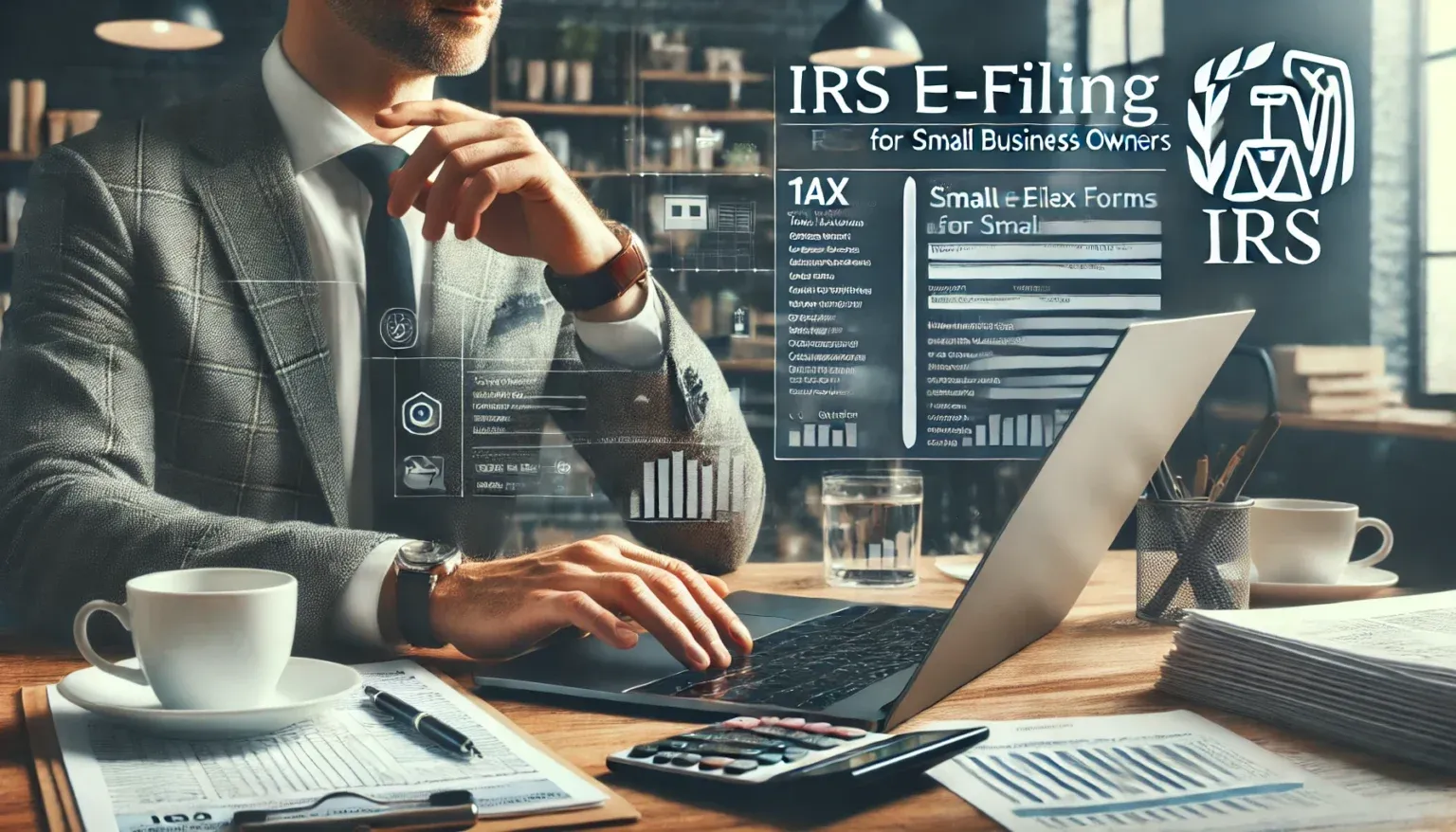
IRS Expands E-Filing Options For Small Business Owners
Read Time:5 Minute, 25 Second
As part of its mission to help ease the process of filing taxes, the IRS has increased options for small business owners to e-file. The expansion comes as demand for digital solutions that help minimize the unnecessary admin and inevitable errors that come with bookkeeping, providing a way for small businesses to address tax liability conveniently. The process becomes faster since you will receive your requested tax forms in no time and, as a small business owner, you can benefit from e-filing options that provide you with reliable documentation.
The expansion of e-filing options is part of an overall IRS initiative to modernize tax systems to make it easier for small businesses. In this article, we’ll discuss what we know so far about e-filing for small businesses and why you should take note as a business owner.
What We Know about IRS’s Expansion Of E-Filing?
The IRS has been on a roll when it comes to increasing e-filing options for small business owners. Here are some of the main updates:
More E-Filing Forms Available
Up until recently, only a handful of individual forms were eFile-approved, but now many forms can be filed electronically. Some important forms include:
- Financial Statements 1120 Form
- Form 1065, Partnership Tax Return
- Use Form 941 (Employer’s Quarterly Federal Tax Return)
- Form 1099 (Information Returns)
The electronic submission shifts the burden off of paper and manual processes. Small business owners also have the option to file these forms electronically. Falling in line with the IRS’s gradual distancing from paper-based submissions, the agency has indicated that e-filing is the way to go.
E-Filing requirements For Certain Businesses
Some businesses are now subject to additional IRS requirements based on their size. Some companies with gross receipts above a statutory threshold, for example, must file electronically. That’s the way these alterations have been designed to improve accuracy and lessen the amount of paperwork for business owners.
Integrating With third-Party E-Filing Providers
To make e-filing easier, the IRS has contracted with third-party e-filing service providers. These are the service providers who have platforms that integrate with existing accounting software for small business owners to create and file their tax returns. These partnerships also allow for real-time updates on the status of submissions — crucial to managing deadlines.
Quick Guide On why E-Filing Is Beneficial For Small Business Owners
In multiple ways, the IRS’s expanded e-filing options are beneficial for small business owners. Some of the benefits include:
Time-Saving
It cuts down time spent filling out forms and waiting for the post office. So your training data is up to and including October 2023.
Increased Accuracy
Digital submission systems also run automated checks for common errors, so you’re less likely to make an error that holds up your filing or lands you a penalty.
Faster Refunds
If you are due a tax refund, then the faster processing time will typically come with e-filing. Most refunds for electronic returns will be issued within 21 days.
The Reduced Risk Of Lost documents
The e-filing system also prevents your tax return from getting lost in the mail or its paper versions getting lost. Your submissions are safe and stored securely online.
Easy Account To find Old Documents
It can be easier for small business owners to find past tax records if they were filed electronically, which can be vital for accounting, audits or tax planning.
A Guide to Getting Started With IRS E-Filing
IRS e-file is user-friendly, and here are the basic steps a small business owner can follow:
- Find out Check Eligibility – Not every e-file, e-filing qualified. Some types may need to meet other requirements before they can file electronically.
- Pick a Provider – Choose an e-filing third-party service provider that integrates with your accounting software. These providers also tend to offer intuitive interfaces and customer support to guide you through the process.
- Be organized – Get all of your documents that you will need to file your taxes. Most of these forms are accessible right from the IRS website or through your e-filing provider.
- Submitting Your Taxes – Once all the forms are filled out and ready to submit, file your e-filing through your platform of choice. Get a receipt showing that you submitted it.
Frequently Asked Questions About Irs E-Filing For Small business Owners
Who must E-File With the IRS?
Based on size and income level, the IRS requires certain types of business to e-file. In general, higher gross receipt businesses or those filing specific forms are required to e-file. These rules do change frequently so do follow up for your particular business with more current details based on the IRS rules.
How Do I Confirm that My E-Filing Was Successful?
You will typically hear from the IRS via email about whether your tax return was accepted or rejected, just after you submit your taxes through an authorized e-filing provider. If something is wrong, the IRS or your provider will let you know.
Is E-Filing Secure?
Is e-filing through an authorized provider safe? When the IRS transmits your data, it protects it with encryption and other security measures. When e-filing your tax filings, utilize only trusted e-filing providers.
Can I e-File As A Sole Proprietor?
As a sole proprietor, you can e-file, as the IRS accepts it for individual (Form 1040) returns as well as other forms such as business tax returns (Schedule C).
How The Future Of Tax Filing looks A Lot Like The Past
As the first always-on e-filing, the IRS understands that small business owners need to support and fruitfully file their taxes and are providing free filing services, and plans to make this even more convenient and efficient in the future. This offers small businesses a simplified solution to meet their tax obligations, with reduced processing times, improved accuracy, and on-demand access to tax forms in one click. As digital tools continue to evolve, e-filing will be a fundamental aspect of modern business operations.
Taking advantage of the expanded options for e-filing alleviates stress at tax time, so small business owners can focus their calendars on helping their businesses statewide continue to grow. Look for any updated IRS requirements, then switch to e-filing if you haven’t already done so.

Happy
14 %

Sad
0 %

Excited
0 %

Sleepy
0 %

Angry
0 %

Surprise
86 %
 1
1
 6
6
More Stories

How Do Solar Panels Fit Into a Smart Home System?
If you are considering installing solar panels, you may also be wondering how they could fit into a wider smart...

Private Leased Offices in London: How to Plan Space, Costs and Fit-Out
A private lease can give you control of your own suite or floor in London. Before committing, establish which costs...
Why Retention Matters More Than Sales in a Subscription Business
There's a moment that catches out almost everyone running a subscription business for the first time. Month one goes well....

Why Your Employee Handbook Needs an Annual Audit
The handbooks that account for the majority of legal problems aren't visibly outdated. At first glance, they often appear modern...

How to Design a High-Impact Trade Show Booth Without Sacrificing Sustainability
Good design creates less waste. The big savings can be found at the end of the show because that's where...

Curved Rental LED Screens: When Are They Worth It?
A flat LED wall is still the right answer for many events. It is clean, familiar, and efficient. But some...